

CUE-Support is a company that actively collaborates with our wishes.
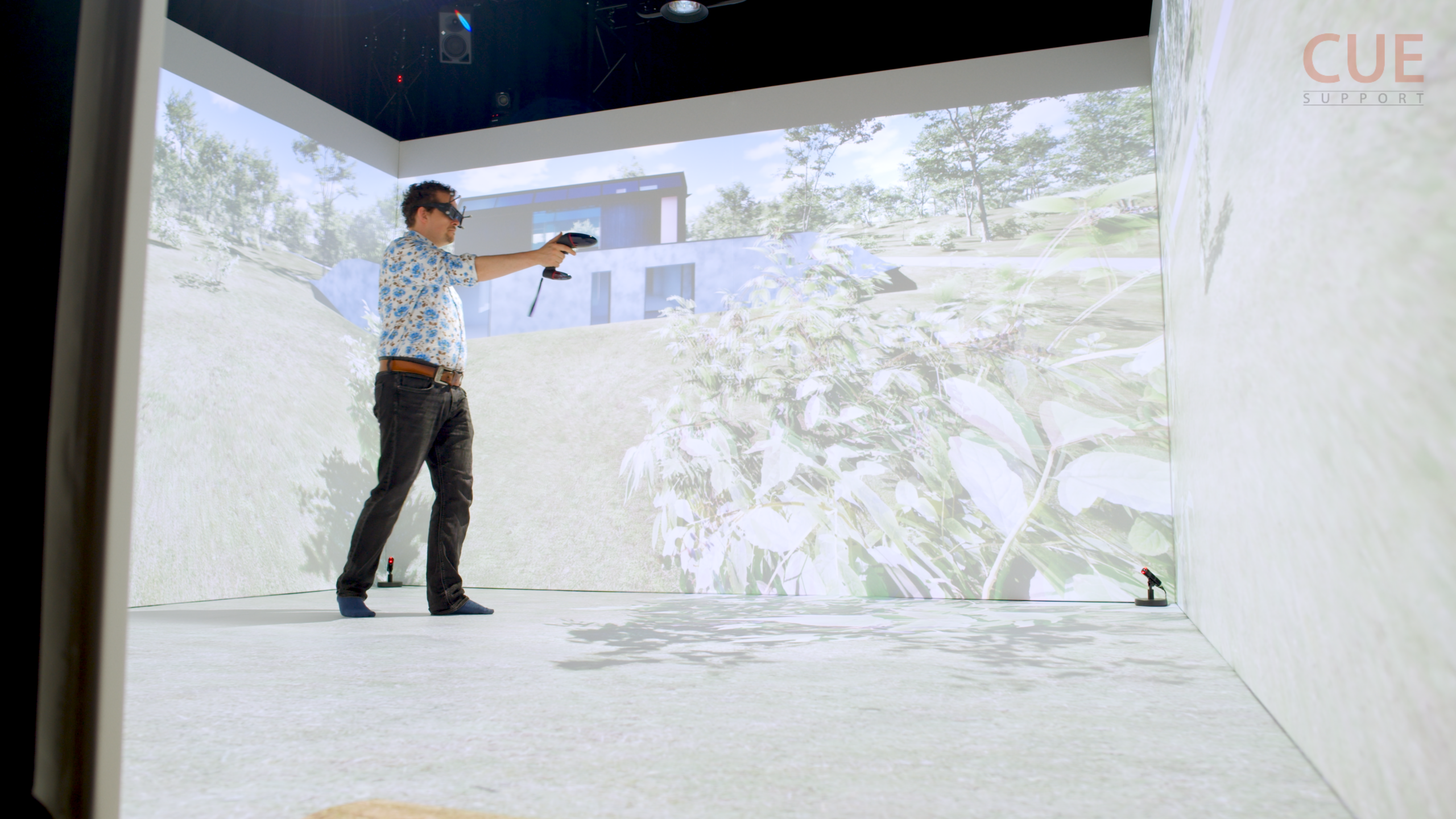
Step into the future of scientific environmental research. CUE-Support was commissioned by TU Delft to realize a groundbreaking project: a 100% time-synced VR Cave at TU Delft. This unique installation combines stereoscopic 3D with an immersive Dolby Atmos experience. Discover how CUE-Support transformed complex hardware challenges into a flawlessly functioning system.
How do we experience the space around us? TU Delft puts groundbreaking VR Cave into use
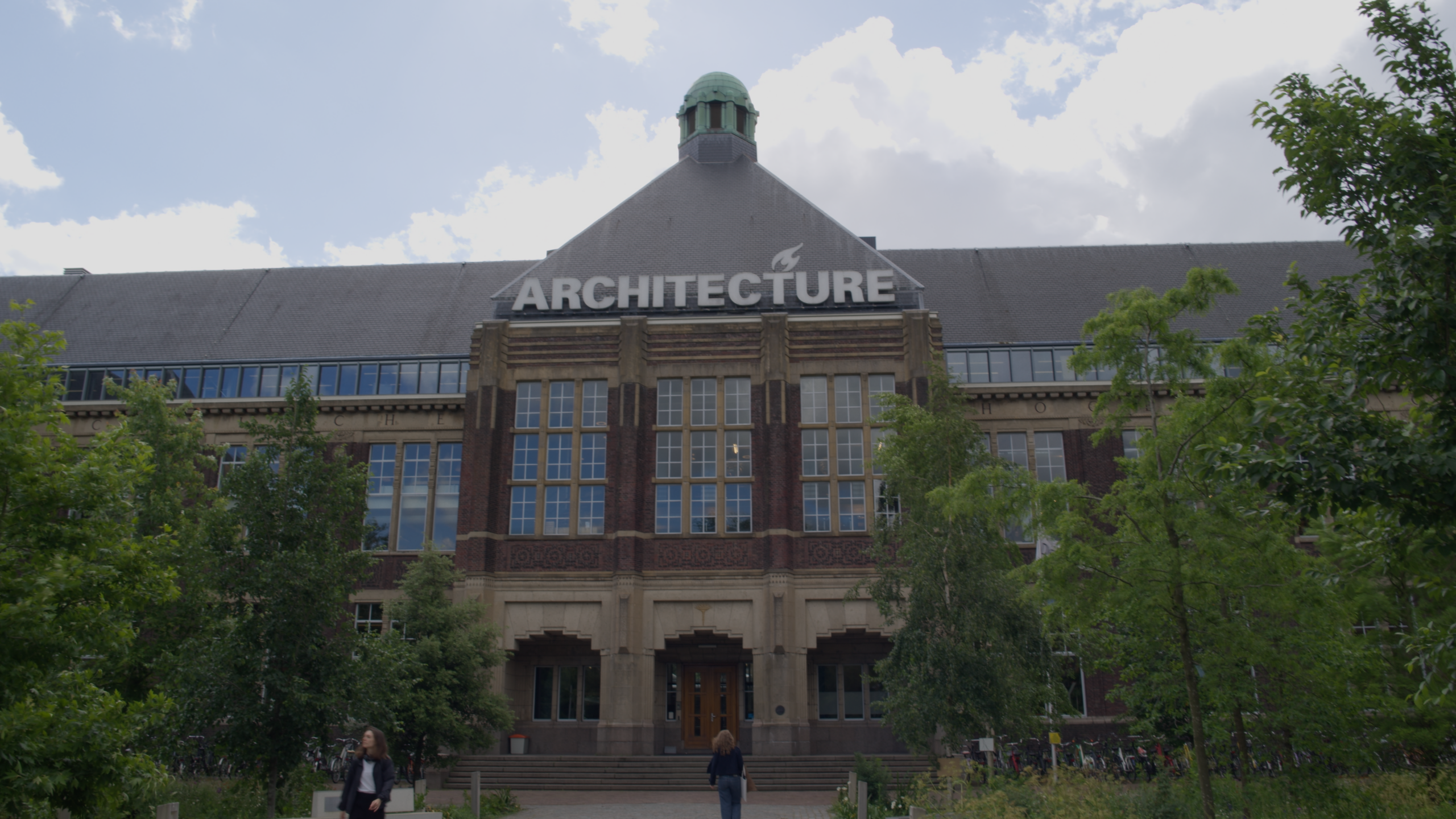
How does our body really react to a building or specific environment? And what does a space do to our brain activity? That is why the TU Delft Faculty of Architecture was looking for answers. They wanted to be able to measure the interaction between people and the environment down to the smallest detail. This ultimately led to a special project: the construction of a state-of-the-art VR Cave at TU Delft. After an intensive two-year development process, the space has now been successfully completed.
The importance of absolute precision
For the scientists at TU Delft, one thing was clear from day one. After all, the collected data must be irrefutably reliable. When test subjects experience a stimulus in the virtual world, researchers must be able to see the immediate physical reaction.
Therefore, various complex data streams had to synchronize flawlessly. Examples include body tracking, video cameras, EEG sensors, and audio recordings. Thanks to an Evertz Master Sync Generator, the entire setup is now 100% time-synced. As a result, researchers analyze the effect of a stimulus with millisecond accuracy.
“CUE-Support was very proactive in considering our requirements right from the start,” says Hans Hoogenboom of TU Delft. “Moreover, they provided excellent assistance with setting up the hardware. It was therefore incredibly nice to receive such good support during this complex process.”

Unexpected challenges behind the scenes
Naturally, building a system with such extreme specifications presents challenges. After all, TU Delft’s new VR-Cave runs on stereoscopic 3D, 4K at 120Hz, and Dolby Atmos audio. However, the biggest puzzle turned out to be the adapters and the cabling.
Because the data streams and requirements were extremely high, many standard adapters simply did not meet their own specifications in practice. Our team therefore invested a great deal of time in an intensive process of trial and error. By manually testing each component, we eventually found the exact configuration. As a result, heavy signals now run through the cables stably and without loss of quality.
High-end technology under the hood
A realistic VR experience ensures reliable test results. That is why the cave is equipped with components from the absolute top segment:
- Image and Rendering: Barco 4K 120Hz projectors and Volfoni 3D technology. Additionally, powerful Unreal PCs with Nvidia RTX 6000 graphics cards ensure crystal-clear, real-time rendering.
- Tracking & Registration: ART’s optical tracking system registers every movement in space. This is also supported by Canon 4K PTZ cameras.
- Audio & Screen: An audio-transparent projection screen from LeGrand hangs in front of the Neumann monitors. This ensures the Dolby Atmos sound matches the visual experience perfectly.
- Infrastructure: In addition to the Evertz Master Sync Generator, an SNS shared storage solution also ensures fast and reliable data storage.

Collaboration as the key to success
Naturally, a complex project like this stands or falls with the right expertise. This VR Cave at TU Delft is therefore the result of close collaboration. CUE-Support handled the hardware integration and technical realization. At the same time, Iron Films played a crucial role in the software configuration of the system.
Thanks to this delivery, TU Delft now has a powerful tool at its disposal. With it, they are setting the standard for environmental research of the future. In short, a wonderful result that CUE-Support is immensely proud of!